Brands are producing more content than ever, but getting people to actually pay attention to it is another story.
“Creating content is no longer the biggest challenge for brands. The real challenge is earning attention in an environment where consumers are overwhelmed by advertising and have more control than ever over what they choose to engage with.”
Max Ramírez
Head of Skyline Studio
Audiences are increasingly selective about what they engage with, and traditional advertising is easier than ever to ignore. Between changing search habits, ad fatigue, banner blindness, and widespread use of ad blockers, even well-funded campaigns can struggle to reach the people they’re meant for.
So what can brands do to cut through the noise, earn consumer trust, and stay visible as the way people discover information continues to change?

Modern audiences have gotten efficient at filtering out anything that reads as commercial chatter, and no amount of ad spend fixes a message nobody wants to receive.
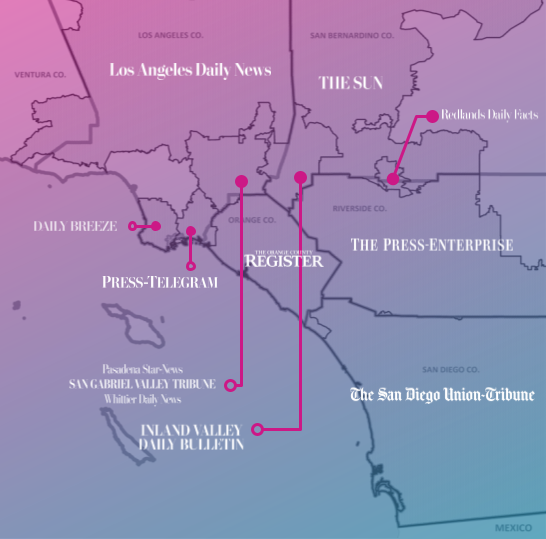
This is where sponsored content earns its place. Produced in partnership with trusted publishers like Southern California News Group (SCNG) and the San Diego Union-Tribune (SDUT), sponsored content from Skyline Studio reaches readers through print, online, weekly publications, and social media with a combined audience of more than 8.1 million readers every week.
What's the difference between SEO, AEO, and GEO?
Search visibility used to mean one thing: ranking on Google, but that’s no longer the full picture. Three distinct disciplines now shape whether your content gets found, answered, or cited.
SEO (Search Engine Optimization) improves visibility on traditional Google search results. It relies on keywords, backlinks, and content quality, and it targets user intent through on-page, off-page, and technical optimization.
AEO (Answer Engine Optimization) improves visibility inside answer boxes and featured snippets. It depends on structured, factual content — schema markup, FAQs, and concise information formatted for direct extraction.
GEO (Generative Engine Optimization) optimizes content for AI-driven platforms like Google AI Overviews, ChatGPT, and Bing Copilot. It focuses on context, trust, and semantic depth rather than keyword density, with the goal of getting AI models to cite your brand directly in generated answers.
Most brands aren’t choosing one of these three and ignoring the rest. The stronger approach treats them as layers: SEO gets you found, AEO gets you quoted, and GEO gets you cited by the AI tools your customers are increasingly using instead of a search bar.
Why do digital ads struggle to hold attention?
Attention has become the scarcest resource in marketing, and traditional display ads are losing the fight for it. According to the Interactive Advertising Bureau (IAB), consumers associate advertising within trusted news environments with higher brand trust, a dynamic that standard banner placements rarely replicate. This research known as the “News Trust Halo.”
The structural problems with display advertising are well documented:
- Interruptive by design: Banner ads interrupt the content experience rather than joining it, which is why they’re glanced at for seconds, if at all (InSkin Media, Research Now, and Sticky).
- Banner blindness: Repeated exposure trains readers to subconsciously ignore ad-shaped content entirely (Nielson).
- Declining search value: SEO value from a display campaign disappears the moment the budget stops. There’s no residual visibility once the flight ends (Keepers Digital)
- Temporary lifespan: A banner ad’s relevance is tied directly to its flight dates. Once the campaign ends, so does the exposure.
Because it’s native and designed to look and read like the editorial content surrounding it, sponsored content operates under different rules.
More importantly, it drives measurable minutes of engagement instead of seconds of exposure. According to a study by Pressboard, readers consume an average of 74% of a branded article, with 55% reading it all the way through. More than half of visitors also spend at least 50 seconds engaging with branded content.
When shared on Facebook, Instagram, X, and LinkedIn, sponsored content generates authoritative backlinks that signal trust to AI search algorithms. And unlike a banner flight, sponsored content is evergreen: it continues to be discovered through search and shared socially long after its original publish date.
Choose sponsored content if you’re optimizing for long-term discoverability and brand trust. Choose traditional display if your only goal is immediate, short-term reach within a fixed campaign window. Most mature content strategies treat sponsored content as the asset that keeps working after the paid flight ends instead of treating this as as an either-or decision
What content formats does Skyline Studio offer?
Skyline Studio structures its sponsored content offering around three core formats, each built for a different stage of a brand’s visibility strategy.
1. Branded content.
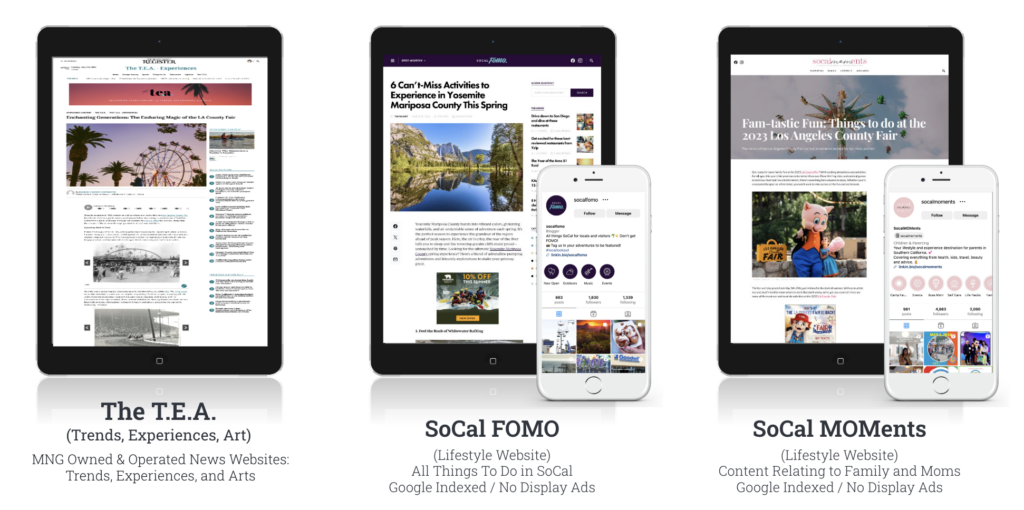
Skyline Studio produces sponsored articles that feature your brand within formats proven to perform editorially — listicles, family-focused features, event coverage, trend pieces, experiential storytelling, and arts content.
For example, The Orange County Register recently published a sponsored article highlighting Toast at Casa Romantica, an event celebrating Casa Romantica Cultural Center and Gardens’ upcoming centennial in 2027.
2. Custom content.
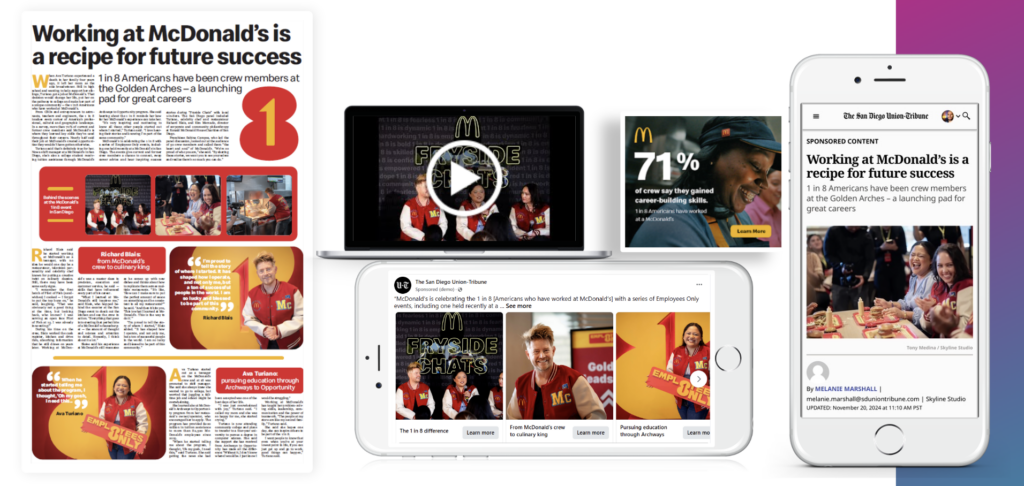
You provide the article, or Skyline Studio produces it for you, covering initiatives like product launches, new campaigns, recruitment drives, or community relations. Each custom content package includes an article and video produced alongside an integrated-media campaign, promoted through social media handshake posts, targeted email blasts, and native display ads.
3. Custom sections.
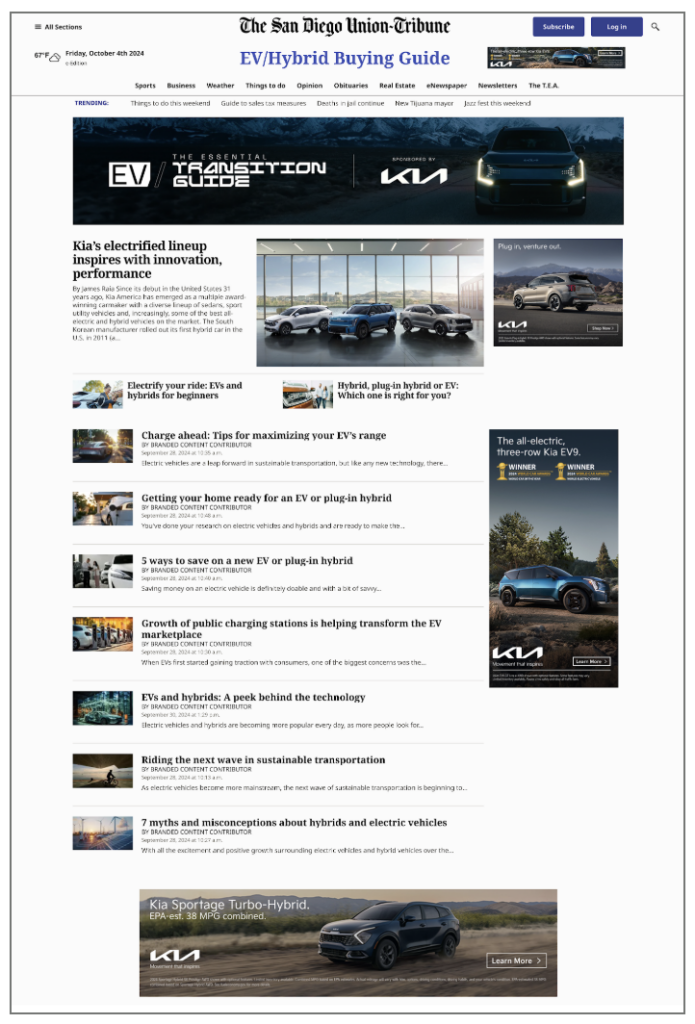
This is the most immersive offering, a branded content hub built for sustained category authority.
Each Custom Section includes ten branded articles on a topic of your choosing, one custom article, category exclusivity within that publication, a display ad takeover across the articles and section, and built-in amplification. It’s designed less as a single placement and more as a standing editorial presence within a trusted publication.
The right format depends on your goal. Choose Branded Content if you need episodic storytelling that builds familiarity over time.
Choose Custom Content if you have a specific initiative (like a launch, a hiring push, a community event that needs its own dedicated media moment).
Choose a Custom Section if you’re building toward category authority and want sustained, exclusive visibility rather than a single article.
Why does advertising on a trusted news publication build brand authority?
Associating your brand with credible journalism creates what researchers call a halo effect. Research from U.K.-based media organization Newsworks found that brands advertising on trusted news platforms are perceived as 1.5 times more trustworthy than those advertising in less credible environments. The IAB’s research reinforces this: a majority of consumers say advertising within the news increases or maintains their trust in the advertised brand.
Despite this, brands spend more than $2.6 billion annually advertising on unreliable websites, including those spreading misinformation, AI-generated content farms, and made-for-advertising (MFA) sites, according to research from NewsGuard and Comscore.
1. Rank and get cited in AI-powered search.
This matters more now than it did five years ago, for a specific reason: generative AI search engines and chatbots tend to prioritize citing authoritative sources when constructing answers. Research from the University of Toronto found that AI-powered search platforms show a strong preference for earned media, such as authoritative third-party publications, over brand-owned websites and social media content.
Sponsored content integrated into a recognized, trusted publication is more likely to be treated as a credible, premium source by AI models than content published in isolation on a brand’s own site. That’s not a guarantee, AI citation behavior is still evolving, but the pattern favors established publishers over unknown domains.
2. Easily explain complex products and concepts.
Sponsoring in-depth articles also solves a practical content problem: explaining something complex. Short-form ad copy has a hard ceiling on nuance. A sponsored feature gives you the space to walk through a product’s mechanics, a service’s value proposition, or an industry shift in enough depth to actually inform the reader, so you can position your brand as a thought leader rather than just an advertiser.
Recent examples of sponsored content from Skyline Studio that takes this approach include:
3. Reach can be extended on through Meta platforms.
Publishing sponsored content is one part of the equation, but getting it in front of the right people is just as important. Platforms like Facebook and Instagram use AI to personalize what users see based on their interests, activity, and past interactions. For brands, this creates an opportunity to extend the reach of sponsored articles beyond a publisher’s website and connect with audiences who are more likely to find the content relevant.
From a budget standpoint, tools like Meta Advantage+ can help take that content further. Using machine learning, these campaigns optimize ad delivery and budget allocation to reach people more likely to engage or convert across Facebook and Instagram. Rather than relying on traditional promotional creative alone, brands can use sponsored articles to introduce themselves to new audiences while building awareness and credibility.
Build a storytelling strategy that holds up.
When it comes to human attention and AI visibility, brands that keep leaning on interruptive, short-lifespan display ads will keep losing ground on both fronts.
But sponsored content solves both problems at once. It’s native enough to earn genuine engagement, credible enough to build the kind of trust that carries a halo effect, and structured well enough to be favored by the AI systems increasingly standing between your brand and your next customer. Backed by SCNG and SDUT’s combined reach of 8.1 million readers each week, it gives your story a trusted environment to land in as well as an evergreen shelf life that a banner ad flight never had.